
Food Guide
Seoul Night Markets & Street Food 2026: Gwangjang, Myeongdong, Mangwon
This article was last updated on 2026-08-23. Fares, opening hours and prices change — confirm with the official operator before you travel.
Your guide to Seoul's top street food markets: Gwangjang, Myeongdong, and Mangwon. Discover must-try dishes, how to order, prices, and tips for 2026.
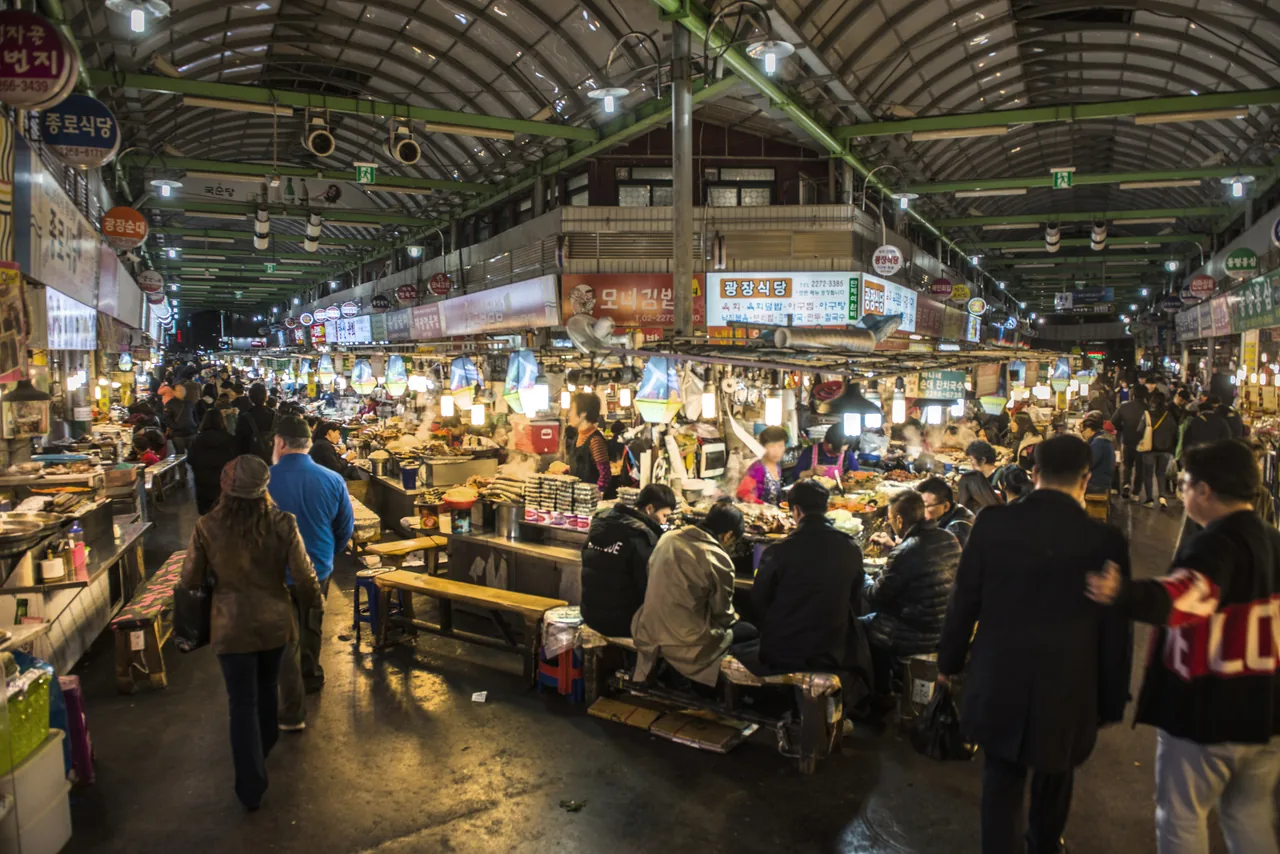
Photo: IR 스튜디오 (Korea Tourism Org.) — 서울특별시 종로구 예지동
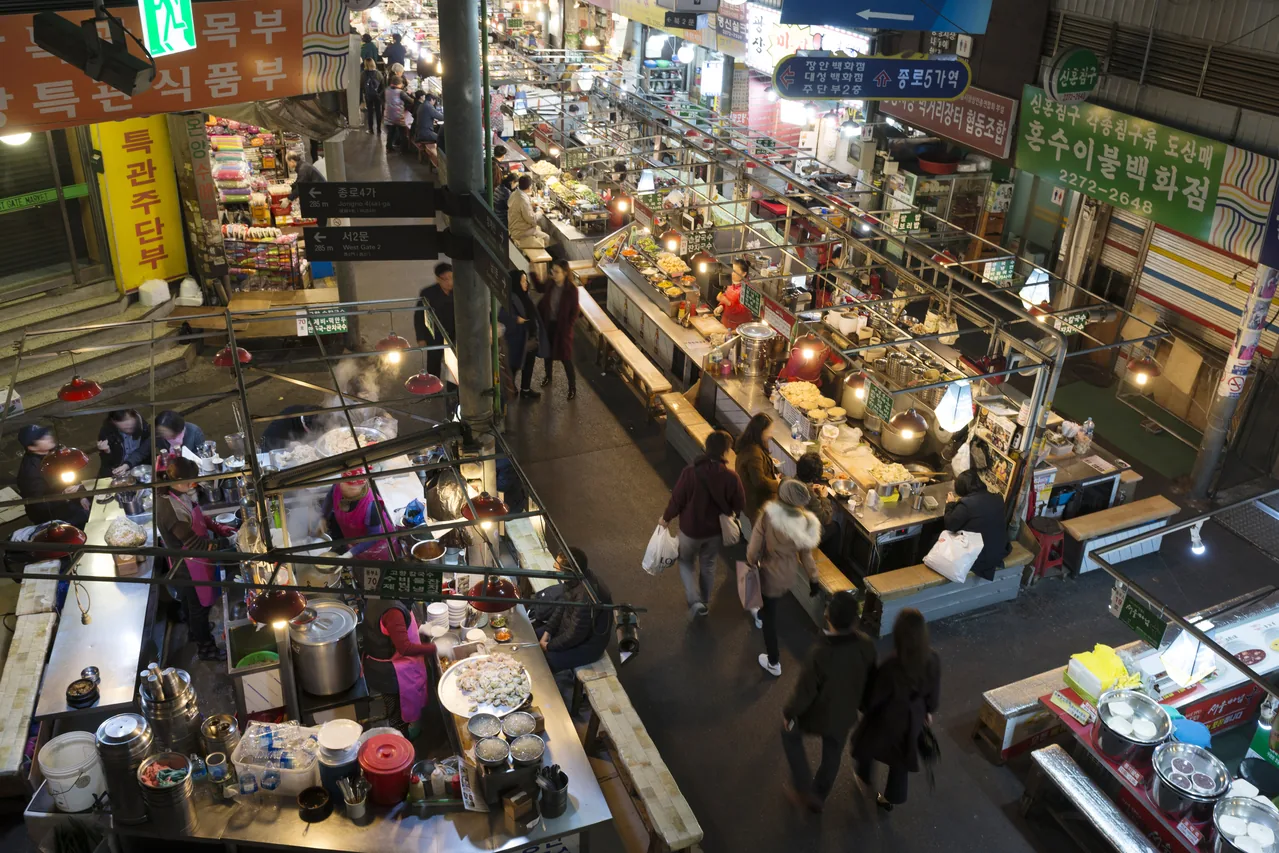
Photo: IR 스튜디오 (Korea Tourism Org.) — 서울특별시 종로구 예지동
Gwangjang Market: The OG Food Hub
Okay, if you're doing Seoul street food, Gwangjang is non-negotiable. It's massive, it's loud, and the food? Hits different. Forget dainty snacks; this is legit, hearty Korean food market style. You'll see ajummas cooking up a storm and the energy is just unreal, especially at night. Ngl, it can be overwhelming the first time, but just follow your nose. Or my recs, obvi.
Must-Try Bites at Gwangjang
- Bindaetteok (빈대떡): This is the star. It's a savory mung bean pancake, crispy on the outside, soft inside. Usually loaded with pork or kimchi.
- Mayak Gimbap (마약김밥): Literally 'drug kimbap' cause it's so addictive. Tiny gimbap rolls, usually served with a soy-vinegar dipping sauce.
- Tteokbokki (떡볶이): Chewy rice cakes in a spicy, sweet gochujang sauce. It's a classic for a reason.
How to Order: Most stalls are grab-and-go or have small counter seats. Pointing works! If you speak a tiny bit of Korean, 'ibi-geo juseyo' (이거 주세요 - 'this one, please') is your best friend. Look for stalls packed with locals – that's always a good sign. Expect to pay around ₩5,000-₩10,000 per dish.
Getting there: Jongno 5-ga Station (Line 1), Exit 8. Open daily, but hours vary; most stalls are lively from 10 AM to 9 PM.
Myeongdong: Tourist-Friendly & Trendy
Myeongdong is way more tourist-oriented, so the vibe is different. It's less of a traditional market and more of a street lined with temporary food stalls that pop up in the evenings. It's super convenient if you're already shopping here. The options are endless, and they often have English menus or pictures, which is nice.
Myeongdong's Signature Snacks
- Tornado Potato (회오리 감자): A whole potato spiral-cut on a skewer, deep-fried and seasoned. It's visually fun.
- Fruit Skewers: Giant strawberries, grapes, or fruit chunks on a stick. Good for a sweet break.
- Egg Bread (계란빵): A sweet bread with a whole egg baked inside. Simple but so good.
- Cheese Lobster/Scallops: If you're feeling fancy, you'll see these grilled with cheese. Pricier, maybe ₩15,000-₩20,000.
How to Order: Point and pay. Most vendors take card, but cash is easier for smaller amounts. Prices here can be slightly higher than Gwangjang, ranging from ₩4,000 to ₩20,000+ for the seafood.
Getting there: Myeongdong Station (Line 4), Exits 5-10. Stalls usually set up around 3 PM and pack up by 10 PM or 11 PM.
Mangwon Market: Local Vibe, Hidden Gems
Mangwon is more chill, catering to locals and younger crowds. It feels more like a neighborhood market. You won't find the same level of tourist hustle, which is kinda the point. It's got a really relaxed atmosphere and some seriously underrated food stalls. Worth the subway ride if you want something a bit more authentic and less crowded than Gwangjang.
Mangwon Market Favorites
- Dakgangjeong (닭강정): Korean sweet and spicy fried chicken pieces. Way easier to eat standing up than full pieces.
- Japchae (잡채): Stir-fried glass noodles with vegetables. A bit lighter, but still satisfying.
- Various Jeon (전): Different types of savory pancakes besides bindaetteok, like kimchi-jeon or pajeon (scallion pancake).
How to Order: Similar to Gwangjang, pointing is key. Many stalls here have small seating areas. Expect prices around ₩5,000-₩10,000.
Getting there: Mangwon Station (Gyeongui-Jungang Line), Exit 2. Follow the main street up for a few minutes. Open roughly 9 AM to 10 PM, but food stalls are best in the afternoon/early evening.
General Tips for Navigating Seoul's Food Markets
Cash is King (Sometimes): While many places take cards, having cash (KRW) makes things way smoother, especially for smaller vendors. ATMs are common.
Don't Be Afraid to Point: Seriously, it's how most people order. You can also use translation apps if you're feeling shy.
Check the Hours: Markets can have slightly different operating hours, and some stalls close earlier than others. Gwangjang is generally lively all day, but evenings are peak. Myeongdong is strictly an evening thing.
Dietary Needs? Be Prepared: Halal and vegan options are getting better but aren't standard everywhere. Gwangjang has bindaetteok (ask for no pork), and you can find fruit or plain japchae. Always double-check ingredients if you have strict requirements. For guaranteed halal/vegan options, building a custom itinerary can save you SO much stress.
FAQ
Q. Is it safe to eat street food in Seoul?
A. Generally, yes. Korean street food culture is huge and well-regulated. Look for busy stalls with high turnover; the food is usually fresh.
Q. What's the best time to go to a food market?
A. Evenings are usually the most lively, especially for Myeongdong. Gwangjang is good all day but picks up significantly from late afternoon onwards.
Q. How much money should I budget for street food?
A. For a good sampling, budget around ₩20,000 - ₩30,000 per person. You can eat more cheaply or much more expensively depending on what you choose!
Q. Can I find non-spicy options?
A. Yes! While many dishes are spicy (tteokbokki, dakgangjeong), you can find options like bindaetteok (can request no kimchi/pork), gimbap, tornado potatoes, egg bread, and fruit skewers that are mild or not spicy.